Downloads

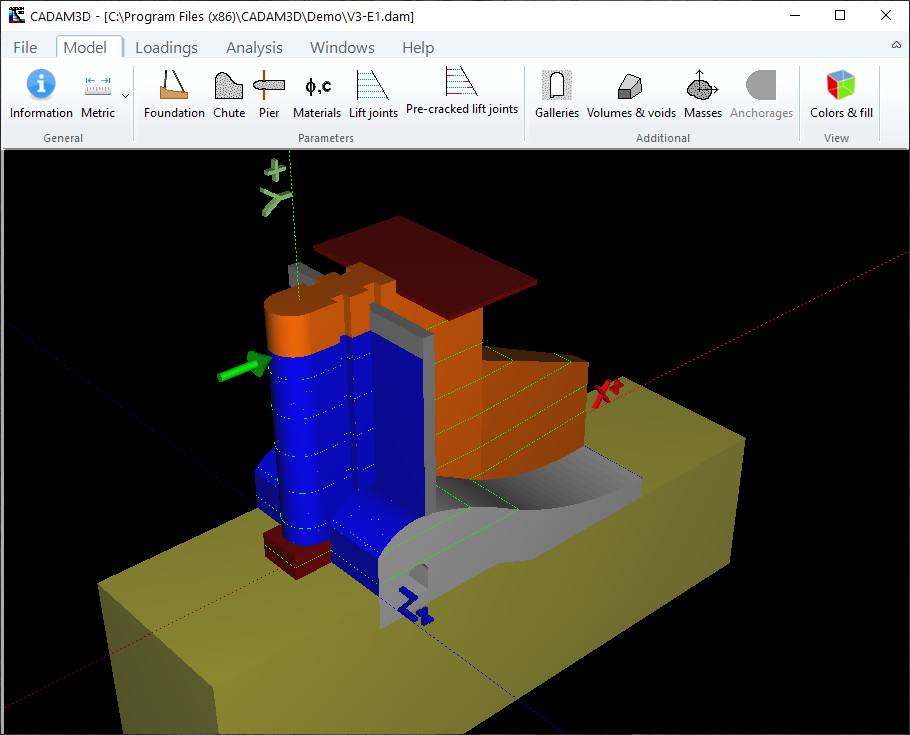
CADAM3D is a user-friendly software based on the gravity method originally developed for one of the world biggest concrete dam owner, Hydro-Quebec, and for Dams and Hydrology of the Quebec Ministry of Environment (Quebec's legislator for dam safety). CADAM3D is fully functional and is intensively used by Hydro-Quebec since 2005. To our knowledge, no other software similar to CADAM3D is available at this time.
If you perform stability analyzes of concrete hydraulic structures, this software will allow you to perform them much faster and more efficiently. If you are interested in this type of software and would like to try CADAM3D for free, please click on the button "Contact us for a free trial of CADAM3D" to send us a message.
, originally developed by DJ Format. While it was officially succeeded by newer versions and eventually Virtual DJ 8/2021+, many users still prefer V3.1 for its specific workflow and "pro" aesthetic. Key Features & Why It’s Preferred Professional Layout
Before you download, there are a few caveats to be aware of regarding the Mix Lab V31 skin:
"The 4-deck layout is tight, but the mixer section is the star. The VU meters are accurate to the millisecond. No software lag." — DJ Reflex (UK) skin mix lab v31 skin for virtual dj 7 better
Using a skin with the wrong aspect ratio causes stretching and pixelation, destroying the clean lines of the Mix Lab V31 design.
Navigate to your Virtual DJ directory and paste it into the Skins folder. Windows: Documents/VirtualDJ/Skins Mac: Documents/VirtualDJ/Skins , originally developed by DJ Format
The defining characteristic of Mix Lab v3.1 is its . Instead of cluttering your laptop screen with effects, samplers, and recording choices simultaneously, this skin utilizes toggleable side and sub-panels.
The default VDJ skin washes out in direct sunlight (a nightmare for mobile wedding DJs). The V31 skin utilizes a deep carbon-fiber texture background with neon highlights (blue, green, and red). The contrast is significantly better. You can glance at the BPM, keylock, and pitch fader from five feet away because the developers have used glowing, LED-style font rendering. The VU meters are accurate to the millisecond
The table below breaks down why the Mix Lab v3.1 upgrade is objectively superior for live performance scenarios: Feature Dimension Stock Virtual DJ 7 Skin Mix Lab v3.1 Interface Fixed, often cluttered layout Hidden slide-out sub-panels EQ Configuration Standard rotating dials Optional dedicated EQ Crossfaders Timecode Display Basic panel configuration Enhanced Timecode (TC) control center Browser Ergonomics Narrow, requires extensive scrolling Expandable, high-density music browser Visual Styling Toy-like, dated color schemes Sleek, dark, hardware-emulated layout 🚀 Key Features That Make Mix Lab v3.1 Better 1. Hidden Custom Panels and Sliding Racks
: Version 3.1 is the most stable version for the VDJ 7 era. While a
The is widely recognized as one of the most transformative custom interfaces ever designed for Virtual DJ 7 , drastically outperforming the software’s stock layout by maximizing screen real estate and workflow efficiency . Released during the golden era of digital DJing by developer DJ FORMAT, this interface bridge cured many of the visual and technical layout issues found in native legacy setups.
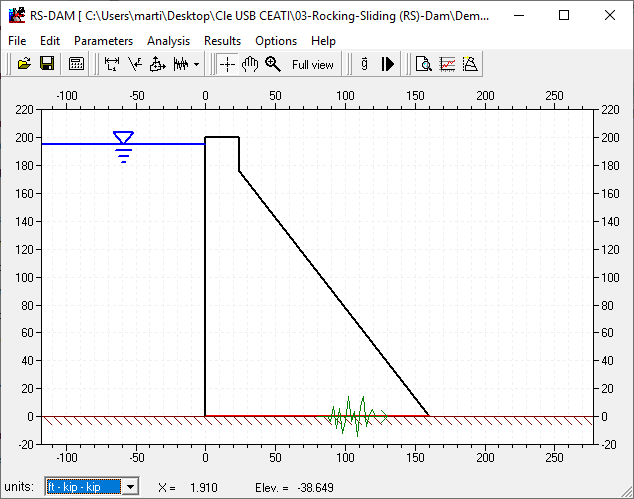
RS-DAM is a computer program that was primarily designed to provide a computational tool to evaluate the transient response of a completely cracked concrete dam section subjected to seismic loads. RS-DAM is also used to support research and development on structural behavior and safety of concrete dams.
RS-DAM is based on rigid body dynamic equilibrium. It performs a transient rocking and/or sliding analysis of a cracked dam section subjected to either base accelerations or time varying forces. Several modelling options have been included to allow users to explore the influence of parameters (e.g. geometry, additional masses, variation of the uplift force upon rotation, hydrodynamic pressures in translation (Westergaard) and rotation, center of rotation moving with sliding, coefficient of restitution of impact, etc...). RS-DAM is developed in a university context and has no commercial aspect.
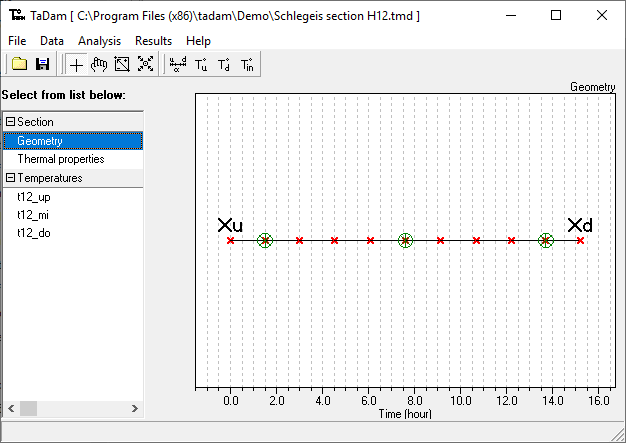
TADAM (Thermal Analysis of concrete DAMs) software employs a new frequency-domain solution technique to solve the 1D thermal transfer problem, allowing the calculation of temperature histories in a concrete dam section.
The direct solution calculates the evolution of the temperature distributions from the temperature histories of the upstream and downstream faces. The inverse solution uses temperature histories, measured inside the section, in order to calculate the temperature fields at the external faces, while taking into account the thermal wave attenuation effects and the phase angles along the section.
TADAM is developed in a university context and has no commercial aspect.